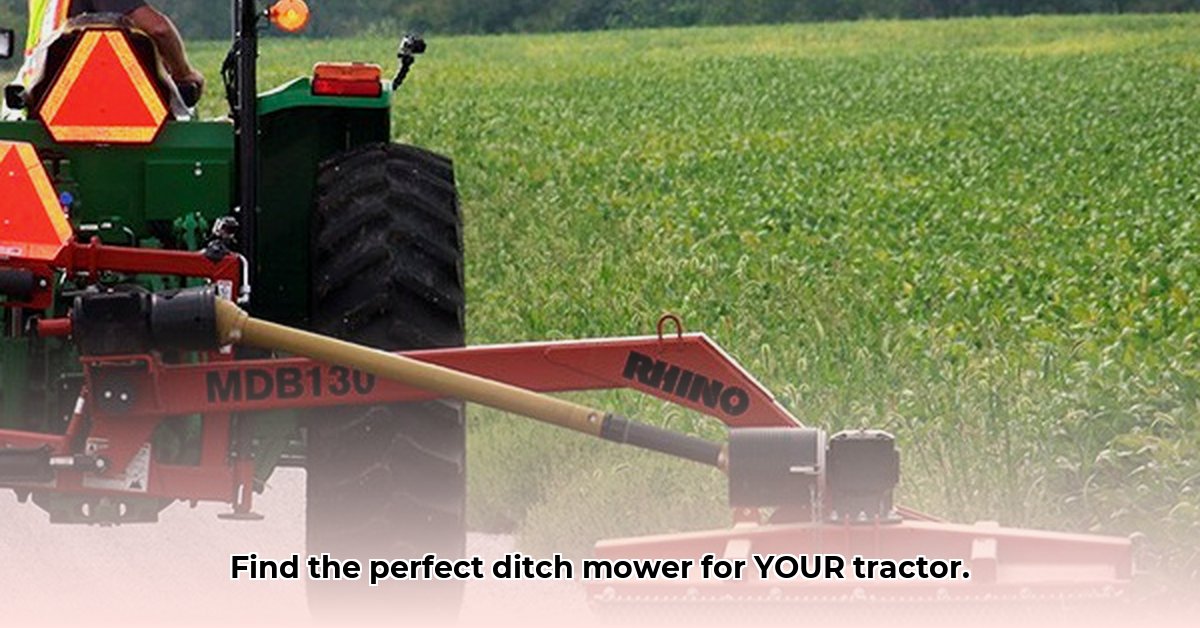
Choosing the right ditch bank mower significantly impacts farm efficiency and land sustainability. This guide compares rear-mounted and offset flail mowers, helping you select the ideal equipment for your operation. For more on mower options, check out this helpful resource on compact tractor mowers.
Understanding Your Ditch Mowing Options
Two primary ditch mower types dominate the market: rear-mounted and offset flail mowers. Each boasts unique capabilities, influencing suitability for varying farm sizes and terrains.
Rear-Mounted Mowers: These heavy-duty mowers excel in large-scale operations with wide-open ditches. Their wide cutting swaths ensure efficient coverage. However, they demand high-horsepower tractors (often 60 HP or more) and exhibit limited maneuverability in confined spaces.
Offset Flail Mowers: Offset flail mowers prioritize versatility. The side-mounted cutting deck allows for precise mowing near obstacles like trees or fences. Their enhanced maneuverability makes them ideal for uneven terrain and smaller farms. These mowers typically require less tractor horsepower (25-50 HP), making them a cost-effective choice for some. Many offer mulching capabilities, returning cut vegetation to the soil as natural fertilizer – a significant benefit for sustainable farming.
Comparative Analysis: Rear-Mounted vs. Offset Flail Mowers
This table highlights key differences to aid your decision-making:
| Feature | Rear-Mounted Mower | Offset Flail Mower |
|---|---|---|
| Cutting Capacity | Wide swath, high volume | Narrower swath, precise cutting |
| Power Requirement | High (60 HP or more) | Lower (25-50 HP, depending on model and vegetation) |
| Maneuverability | Limited, poor in confined areas | Excellent, ideal for tight spaces and slopes |
| Terrain Suitability | Best for large, open areas | Adaptable to diverse terrains, including slopes |
| Mulching Capability | Usually not standard | Frequently a standard feature |
| Initial Cost | Generally higher | Generally lower |
| Maintenance | Moderate | Moderate to high (depending on hydraulic systems) |
Choosing the Right Ditch Bank Mower: A Step-by-Step Guide
Making an informed choice requires a systematic approach. Follow these steps:
Assess Your Land: Evaluate ditch width, terrain complexity, vegetation density, and the presence of obstacles. This assessment informs your mower's required power and maneuverability.
Check Tractor Compatibility: Verify your tractor's horsepower rating aligns with the mower's requirements. Consult your tractor dealer for recommendations. "Is my tractor powerful enough for this type of mower?" is a crucial question.
Define Your Budget: Consider not only the initial purchase price but also ongoing fuel, maintenance, and repair costs. Obtain quotes from multiple suppliers.
Thorough Research: Explore online reviews, compare specifications from various reputable manufacturers, and watch videos showcasing mower performance in different settings. "What are other farmers saying about this model?" is valuable insight.
Request a Demonstration: If possible, request a demonstration to witness the mower's capabilities firsthand. This allows you to assess its suitability for your specific needs and conditions.
Prioritize Safety: Choose a mower equipped with robust safety features and ensure you understand operating procedures thoroughly. Always wear appropriate Personal Protective Equipment (PPE).
Safety and Regulatory Compliance
Safety is paramount. Always wear appropriate PPE, including safety glasses, hearing protection, and sturdy work boots. Regularly inspect the mower before operation, checking for blade damage and ensuring safety mechanisms function correctly. Adhere strictly to all manufacturer instructions and relevant safety guidelines.
Maintenance and Operation
Regular maintenance prevents costly breakdowns and extends mower lifespan. This includes scheduled servicing, blade sharpening/replacement, timely part replacement, and proper storage. Following the manufacturer's maintenance schedule is crucial. "How often should I sharpen the blades?" is a question to address in the manual.
Case Study: Sustainable Farming with Offset Flail Mowers
[Insert Case Study Here - Example: A farmer in Iowa using an offset flail mower successfully reduced weed growth, improved soil health through mulching, and saved time compared to traditional methods.]
Conclusion
Selecting the appropriate ditch bank mower is crucial for efficient and sustainable farming practices. By carefully assessing your needs, comparing mower types, and prioritizing safety, you can optimize your land management and improve your farm's overall productivity.